Sunday, 9 July 2017

Seven Things to Consider When Deciding on a Brand Name

Being with students, especially in their natural habitat, is always refreshing. Their energy is contagious and their ideas often exude sparks of radical thinking.

So when I received a request to be part of the jury panel for an inter-B-School business idea competition, I consented to it despite it being scheduled on a Winter Sunday morning!. Each student team had to present a business idea along with the GTM and business plan. A couple of teams made stellar presentations. However, I found it somewhat odd that every team had come up with a descriptive (functional) brand name for its product/service. For instance, if a business idea was around fashion, the brand was called Fashion-Something or some such. Obviously, none stuck.
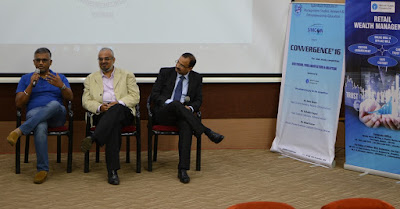
Subir Ghosh

That prompted me to write this post. In the startup age, it is important for young entrepreneurs to get their brand names right.

Coming up with a descriptive name is a natural human response. That's how we function under regular circumstances. If we're going to work, we say we're going to work. We don't say we're going to have another day in Paradise. If we're eating a paper masala dosa, we say we're eating a paper masala dosa. We don't say that we're discovering the delectable taste of warm potatoes gift-wrapped in edible paper.

But Branding & Marketing is ALL about storytelling, not merely relaying facts (not false stories though). So here goes: seven simple points to keep in mind when you're trying to think up or select a name for your brand.


1. Is it unique?

Unique sticks. It's a simple principle that often gets forgotten. Just because almost every gym in town has 'Body' or 'Health' in its name doesn't mean yours should too. In fact, that's exactly why it needn't! Make your brand name stand out. It need not mix with its peers. Think Starbucks, Google, SurveyMonkey.

2. Does it lend itself well  to "spreading the word"?

Your brand name will spread via the written and spoken word. I'm referring here to just the name and not its depiction. So think about this aspect deeply. Are people likely to make spelling errors when typing your brand name? Say your brand name aloud. Make sentences with it. Say those sentences aloud. Say those in a whisper. See whether "spreading the word" literally would work for your brand. What would the brand's web address be? Is it available? Will it accommodate your brand well? For instance, if you have an "&" in your brand name, you will not be able to include that & in the URL. If you choose to call your furniture app 'Bold Dimensions', would people get the name if you shouted "download bold dimensions" across the floor? Think whether something like NearBuy is a great brand name, or just good wordplay.

Subir Ghosh

3. Is it category-neutral?

You might start out as a hotel aggregator but end up being a holistic travel app. Who knows what brand extensions lie in store for you in the future? Tying your brand to a single category is akin to yoking yourself to the Present. Why not pick a name that would work for any category?

4. Does it have a strong visual connection?

The brain remembers things visually. So if your brand name evokes a distinct image in the mind, it's great for brand recall. It's not necessary to leave that job to your logo; your brand name could also shoulder that responsibility. It's not a must, but it surely helps. Think Shell, Orange, BlackBerry.

5. Does it commemorate a story?

Again, this is not a necessary attribute, but if you have an interesting story around your inception, you might want to go with a name that commemorates that story. Here is one such story.


6. Would it do well on search engines on its own?

It's somewhat related to point #1 on uniqueness. If you have a unique name, chances are you will figure well on organic searches. Doing 'search research' is a must for all the options you're considering.

7. Does it have any negative connotation?

Well, this is an obvious one. It's important to do your homework on this so that your brand doesn't unwittingly end up receiving flak because it means something rude/disrespectful/funny in a different culture/context/country/language. Here are some examples of brands that ended up being the butt of jokes.

Of course, these guidelines are simplistic, but then, it's better to have a basic understanding than having none at all.

Pictures courtesy of SIMSREE

Tuesday, 15 May 2012

Mobile Marketing Simplified‏

The term 'Mobile Marketing' often comes with so much jargon that the baggage can get overwhelming.

Alex Meisl, Chairman of Mobile Marketing agency Sponge, talks about Mobile Marketing in refreshingly simple terms in this podcast.

Thursday, 21 April 2011

Talking the talk


Dr Kaushik Basu (Chief Economic Advisor, Ministry of Finance, Government of India) has raised some hackles with one his working papers on corruption.

In his paper, Dr Basu argues that for bribes paid to get routine work done (he calls these "harassment bribes"), Law should reserve all punitive action for the bribee and none for the briber. He points out that the under the current legal system, the quantum of punishment could be same for the bribee and the briber. The change in law "will cause a dramatic drop in the incidence of bribery," thinks Dr Basu"The reasoning is that once the law is altered in this manner, after the act of bribery is committed, the interests of the bribe giver and the bribe taker will be at divergence." 

The idea may seem radical to legal luminaries, but I'd wager that a lot of us laymen didn't even know that paying a bribe and taking a bribe are equal crimes in the eyes of the Law. In fact, it seems hugely unfair that a person who has often no option but to pay up in order to get things done should be held as guilty as the parasite who doesn't move his butt until his palms are greased. So, to a layman like me, Dr Basu's idea seems logical and one that should be implemented.

However, the idea has faced flak from several quarters. Some newspapers have carried stories under headlines that do little justice to the idea ("Legalise corruption: Chief economic advisor"). Social media has been abuzz with messages trying to interpret and misinterpret what Dr Basu had meant (an example here).

The problem, in my opinion, is with Basu's choice of words rather than the idea itself. Take, for instance, the title of his paper:
Why, for a Class of Bribes, the Act of Giving a Bribe should be Treated as Legal

At first glance, this could seem like an ominous prescription. If the objective of presenting the idea through a paper is (in Dr Basu's words) "to minimize the risk of misinterpretation," this title probably doesn't live up to the objective. Rather it is an open invitation to those who specialise in misinterpretation.

Maybe a title like the one below could've worked better:
Why, for a Class of Bribes, Law should treat the Bribe Taker and the Bribe Giver Differently

Headlines and titles are often taken at their face value in today's haven't-got-a-whole-minute world. In any communication, the first line is more important now than it ever was.

Pic source: www.thehindu.com

Friday, 21 January 2011

Brochure for sure

B2C sales pitches often seem like a trick.

Take the case of holiday time-shares. Salespersons spend a lot of time interacting with prospects. They scribble on sheets trying to explain various "plans" offered. In the end, you have a lot of uttered promises, a bunch of scribbled notes and a pair of eager eyes peering at you for an answer, but no printed brochure that gives you the reassurance that what you've just heard is indeed the truth and not the taradiddles of an eager salesperson.

A printed brochure can do the pitch a whole lot of good. It increases believability considerably and consequently the chances of  sale closure are enhanced (unless of course one's business model is based on trapping customers through false promises that obviously cannot be printed, which is exactly the impression you create when you pitch without a brochure). And by brochure, I mean a brochure, not photocopies or prints of certain documents.

Another trend I've noticed is the tendency to lead the prospect down a blind alley into a tight corner. The pitch includes questions designed to elicit specific answers that are going to make saying "No" to the offer later seem stupid. While this tactic may seem clever, it actually draws the battle lines between the salesperson and the prospect. The defence shields are upped, and the salesperson is no longer on the prospect's side.

If you are selling a time-share, leave behind a printed brochure that has all plans & entitlements listed (and not just breathtaking pictures of your resorts). If you are selling insurance, hand over the product brochure(s) to your audience. And please, give the prospect some time and space to breathe. The Give-me-your-answer-now approach works sometime when you are proposing marriage, but otherwise it's not a nice thing to say to a prospect.

Wednesday, 24 November 2010

"Baithoongi piya Bolero mein"

While brand managers and ad agencies "strategise" in conference rooms, sometimes brands get a fillip from unexpected quarters. This hilarious folksy video that sings paeans to Bolero (an SUV from the Mahindra stable) has surfaced on YouTube.


The song takes digs at many automotive brands including the likes of Honda City, Indica, Tata Sumo and even the Scorpio (which comes from the same Mahindra stable).

Somebody tweeted the link to Mr Anand Mahindra, the Vice Chairman and MD of Mahindra & Mahindra Ltd. and he retweeted the link with his comment:


Marketing is not just about "creating" a buzz, it's also about spreading the buzz.

Wednesday, 17 November 2010

Hey fever

For some reason, some brands try really hard to sound cool & trendy on social media. Nothing wrong with that as long as it sounds natural and apt. However, sometimes the 'coolness' turns so robotic that it teeters on the edge of civility.

For instance, Nokia India, in its tweets, seems so attached to "hey" that almost all their responses begin with that word!

Hey there Nokia, wats wid connectin ppl?

Wednesday, 22 September 2010

Small change, but it jingles

A couple of months ago, I had thought aloud about the Indian Railways' choice of imagery. The Indian Railways has now changed the picture on its homepage.


I do not know what prompted the change (Commonwealth?), but it surely is a good sign.

Monday, 9 August 2010

Brand romance

The acid test of an Internet romance is the first face-to-face meeting. After days (sometimes months/years) of chatting/emailing/FBing/tweeting, the protagonists finally meet. Quite often, I'd reckon, the imagery built over online interactions gets a thorough jolt in the first meeting.

In today's digital age, brands and consumers undergo similar experiences. Before a consumer meets a physical brand in the physical space, she will probably check it out in the virtual space. As Seth Godin says,"The chances that you and your brand will first be encountered digitally grow every day." If the brand seems worthy of attention, the consumer will probably decide to meet the brand in the physical space. And then she will make that all-important choice: Yes, No or Maybe.

In order to make the first meeting happen, the brand must tell interesting stories. And in order to get the final decision in its favour, the brand must live up to those stories. Brands that tell interesting stories, display behaviour that gives credence to those stories and then wow the consumer with some unexpected surprises usually end up landing regular candlelit dinners with the consumer. Yes, telling interesting stories might need some practice, but the stories have to be genuine and the brand's demeanour must always corroborate the stories. Obviously, this cannot be achieved by pretence. The brand must look inward to source the interesting stories.

If we think of brands as either Romantics or Pretenders (although the two are not always mutually exclusive), it's obvious that the Romantics would stand a better chance of winning over hearts. Sounds simple, but most brands err on the side of overpromise. The first meeting happens. but sigh, no candlelit dinners thereafter.

Related post: Make big promises; overdeliver

[Picture credit: Nevit Dilmen]

Friday, 9 July 2010

What was the Indian Railways thinking...

...when it decided to put this picture on its homepage?


In our attempts to woo the foreign tourist with imagery that strengthens the misleading stereotype of India, we often score self-goals (sorry about the pun, it's FIFA time). Even vintage needs good packaging.

And why on earth should the lifeline of the country be so obsessive about foreign tourists?

Update (22 September, 2010): The "steamy" pic has now been replaced by a "vatanu-cool" one!

Tuesday, 22 June 2010

To err is Human, to deny Airline

“There was a big fight,” recalls Shuchita Srivastava. “Passengers were not getting off the plane, they would not let the door close. The passengers insisted they had valid boarding cards and it was the airline’s problem to give them seats. One lady entered the cockpit with her child and said, ‘I am going to sit here if you don’t take me to Mumbai’.”
Mint reports that a SpiceJet flight allegedly took to the skies with more people on board than permitted. Apparently, 15 passengers were asked to get off the plane after the scheduled 212-seater aircraft was switched for a 189-seater. This obviously angered the passengers and they declined to deplane. "The airline then asked that the children sit on the laps of adults they were travelling with" in order to accommodate all passengers.

If the incident did take place as described, it is indeed a cause for grave concern. In a situation like this, what should an airline do? Definitely NOT compromise safety guidelines, no matter how much the pressure from passengers. It's obvious that passengers would get agitated when they are asked to deplane after they have boarded the plane with valid boarding passes.

The first right thing to do is to apologise in a situation like this. An apology is the least that a service-provider owes when a goof-up happens. Then the airline could've explained why they couldn't fly with everybody on board and then could've requested some passengers to move to another flight with an offer: whoever volunteered to move to another flight would be flown free or given a free-flight voucher.

It would have cost the airline less than a lac of rupees in opportunity cost, to fly fifteen people from Delhi to Mumbai and would have solved the crisis, without putting lives at risk and without leaving too much bad taste in the mouth.

Communicating the right things at the right time, especially in times of crisis, can save not just faces, but lives too.

Monday, 3 May 2010

Coarse print

Guess where I found this friendly message pasted?


On a prominent wall at Crossword! And no, this was not a single aberration. I found these sheets pasted at several places inside the store.

A bookstore is the last place one would associate with assassination of grammar. Besides, this is a bookstore that was once famous for its witty lines. By its own admission, Crossword wants to "encourage people to stay and browse" but such messages surely don't match that intent.

This is a huge challenge with chain stores. Each store has its peculiarities and often needs individual messaging. How does a chain build competencies and systems so that a Store Manager has better ways of communication than putting up such notices? These innocuos-looking A4 printouts can cause great damage. They score high on eyeballs (well, they're intended to) and can blow brand essence out the window. And then somebody, somewhere will once again start asking research questions.

Tuesday, 16 February 2010

When the visual is the villain

This is an ad for a fund that promises to make your money work harder. The bloke's walking blind into disaster with a pile of boxes!

If this is how one made money work harder, I'd rather my money remained fast asleep.

Thursday, 11 February 2010

Finally, someone has had the guts to say it

In the of rush to expand customer base, it is now commonplace to offer "promotional offers" to new customers, while existing customers continue to languish, shackled by old contracts. I have always had an issue with this and have blogged out it earlier [(Customer) Happiness is a state of being, Marcom Wishlist for 2010].

According to a report in the DNA , Mr R R Nair, Chairman, LIC Housing Finance Limited, had this to say in reaction to the news of many banks withdrawing their teaser-rate home loan offers:

"Any discount of more than 50 basis points (0.5%) on a promotional basis is not good. This means your existing customers are paying much more than the new customers. You are creating a different class of customers."
Whether teaser home-loan products are harmful is an issue best left to finance experts, but that a corporate leader has agreed that it is wrong to shortchange existing customers in the frenzy to get new customers, is welcome news, specially when he belongs to a Industry that is notorious for promoting this practice.

All is not lost.

Wednesday, 3 February 2010

Wanted: More Social Heads

While we have been obsessing over tweets from Shashi Tharoor and Priyanka Chopra, a silent revolution has been brewing in the Indian corporate world.

Business leaders are realising that there're no better ambassadors of their brand than them, and the age of putting up walls around you is virtually over.

Anand Mahindra, the Vice Chairman & MD of the Mahindra Group, has been quietly setting an example on Twitter. While many new age companies and their CEOs have embraced Twitter, most traditional behemoths shy away from it, ostensibly for fear of backlash especially from irate customers, or because they are clueless about it.

In this scenario, Mr Mahindra's Twitter page (@anandmahindra) is a welcome breath of fresh air. He shares interesting tidbits, and most importantly, responds to queries and provides solutions.

Here are some examples of his Twitter conversations:

Monday, 21 December 2009

Marcom Wishlist for 2010

  1. That telecallers stop parroting "Is there anything else I may assist you with?" to conclude the call
    "Do you need any other help?" is shorter, sweeter and makes me feel I'm talking to a Homo Sapien.
     
  2. That the same telecallers cut out the "Thank you for calling Abracadabra Magic services" part
    I know who I have called. Just end on a happy note and let me get on with life.
     
  3. That the word "promotion" be banned from all Marcom material
    It's promotion for the company/brand. For me--the customer--it could be an offer, a deal or some such, but not a promotion.
     
  4. That the term "Presenting Sponsor" appear only in sponsorship brochures and presentations
    For the man on the street, "Pahalwan Body Oil presents Kushti Kishton Mein" is more intelligible. If you do need a descriptor, use "Brought to you by" or "Presented by" but not "Presenting Sponsor". It's your internal lingo, please don't unleash it on me, the aam aadmi.
     
  5. That TV and radio shows stop the breathless muttering of taglines along with the sponsor brands
    "Brought to you by Locomotive Mustard Oil--Har boond mein train ki shakti, in association with Balramgarh Shakkar - Live life with sugary sweetness" is like forcing the taglines down my throat and that ain't sweet.
     
  6. That contractual service brands save the best offers for their existing customers...
    and not make them feel cheated by offering new customers the same service at 50% "promotional" discount while the trapped ones continue to pay a premium for being loyal.
    [Hint: Think home loans, pest control services, club memberships...]
I know the last point is not within the purview of Marcom, but what the heck, this is a wishlist, right?

Have a great 2010.

Monday, 16 November 2009

Mustache Magic

Many many years ago, a certain mustachioed gentleman changed the way Fevicol went about advertising its white adhesive. Last week, the brand celebrated 50 years of adhesiveness. The mustachioed gentleman and his cohorts (all mustachioed of course, but without the trademark handlebar) came up with this:


This is the latest in the series of brilliant commercials for Fevicol which have stuck around for over two decades. It all started with an ad for a different brand. The man behind the mustache reminisces:
"The very first ad that I ever did for Pidilite was not even for Fevicol; the 'Dam laga ke haisha' campaign was originally created by me for Fevitite, which was another Pidilite brand. I created the radio ad for it and took it to Madhukarbhai, his father and the team. They thought it was a fantastic idea, and suggested that I make a film around the concept. When I presented the film, they loved it. That’s when Madhukarbhai’s father said to me, “Fevitite is too small a brand for a big idea like this. Take the money all over again and shoot it for Fevicol," and that was the beginning of everything."

Here's that Fevitite-turned-Fevicol ad:


May the magic continue!

Friday, 13 November 2009

Coke can, but will it?


A design concept titled COLORLESS by Harc Lee is being profusely applauded by netizens.

Here's the designer's take:

"A convex logo substitutes colorfully sprayed can. Naked can help to reduce air and water pollution occurred in its coloring process. It also reduces energy and effort to separate toxic color paint from aluminum in recycling process. Huge amount of energy and paint required to manufacture colored cans will be saved. Instead of toxic paint, manufacturers process aluminum with a pressing machine that indicates brand identity on surface."

Prima facie, it looks like a great idea. Besides the environment friendly angle that the can projects, it looks stunning too.

It'd be interesting to watch if Coke actually puts the design on the production line.

Hat Tip: TheDieline.com

Friday, 28 August 2009

Panicky brand, arbitrary arbitration?

The travel community portal oktatabyebye.com has been around for some time. In May 2009, Tata Sons Ltd filed a complaint with the World Intellectual Property Organization (WIPO) against the portal owners, contendng that the domain name infringes the right of its registered trademark/service mark TATA. WIPO is a specialised agency of the United Nations, established to promote the protection of IP throughout the world.

WIPO delivered its decision recently wherein it noted that the respondent had registered and is using the domain name (oktatabyebye.com) in bad faith; and ordered the domain name to be transferred to Tata Sons Limited.

This looks like a strange decision. "Ok Tata Bye Bye" is a colloquial phrase often used in our country to bid a jovial farewell. The portal has called for public support to preserve its rights over the domain.

Brand owners sometimes get unnecessarily jittery about their trademarks being misused. Brands are not just logos and trademarks. What you do as a company is also part of your branding.

Thursday, 6 August 2009

Twice is not always nice

A year ago, I had posted about irritating repeats in cinema theatre advertising.

The same irritant has come to haunt online advertising as well. Very often, one sees the same banner repeated on the same webpage. I'm not sure whether any advertiser would like to burn away impressions like this. Mustn't the ad servers be more intelligent?

Monday, 27 July 2009

GreatNonStickPansSince1980: How's that for a brand name?

Businesses very often want their brand names to spell out their product/service. While it's not always a bad idea, getting fixated on this style of branding often leads us to very uninteresting names and sometimes even works at cross-purposes with the business.

A case in point is TinyURL.com. A website whose raison d'ĂȘtre is shortening URLs has a URL that is ELEVEN characters long!

If I shorten the link to this blog using TinyURL, I get http://tinyurl.com/lebj3y. If I use bit.ly, I get http://bit.ly/QyFOc. That's six characters saved. Now on platforms like Twitter where every character counts, it's not surprising that bit.ly scores over TinyURL.com.

On a slightly unrelated note, an NYT blogger cites some more reasons why bit.ly has found a haven at Twitter.